
On this page
Mallorca has around 260 beaches, and the ones you have seen in photographs are mostly the same twenty. What the photographs leave out is how you get to them. In 2026 that is the part of the day that goes wrong: the car park at Es Trenc fills by mid morning, Calo des Moro holds about sixty people and receives many times that, and at Cala Torta and Cala Varques the authorities have simply stopped letting cars near the coast at all.
So this guide is organised around access rather than beauty. Which beaches you can still drive to, when the car park fills, which ones the bus reaches, and which coves are now realistically a boat trip or a long walk. The rules changed in several places this year, and a few of the changes are not what the internet says they are.
What changed for 2026
| Where | What changed | What it means for you |
|---|---|---|
| Formentor | Road restriction on the Ma-2210, 15 May to 18 October, 10:00 to 22:00 | You can still drive to the beach until the car park fills. Only the stretch beyond it, to the lighthouse, is closed to cars |
| Cala Varques | The Consell sealed the old Ma-4014 parking strip with bollards in March 2026 | There is now no legal parking. A roughly 2 km walk each way, or arrive by sea |
| Cala Agulla | Barrier installed at the entrance in May 2026 | Park at es Clot de sa Grava. Parking on the park track carries a double penalty |
| Alcudia | Around 2,000 resident-only spaces since 15 June 2026, beach zones included | A 200 euro fine. More than 200 were issued in the first two weeks |
| Cala Llombards | In June 2026 the courts upheld the order to close the beach car park | The free car park at the entrance to the cove, used by walkers to Calo des Moro, is a separate one |
| Cala Torta, Cala Mitjana, Cala Estreta | Car access banned and the tracks chained since 2024 | On foot, by bike, or from the sea. There is no other way in |
| Boat rental | Real Decreto 1188/2025 | Summer 2026 is the last season you can rent a licence free boat in Spain |
The best beaches in Mallorca, and how hard they are to reach
| Beach | Where | Surface | Getting there | Boat better? |
|---|---|---|---|---|
| Es Trenc | South (Campos) | 3 km of white sand, no buildings behind it | Two paid car parks, full by mid morning. No bus | Yes, from Colonia de Sant Jordi or Sa Rapita |
| Platja de Muro | North | 5.2 km of fine sand, shallow a long way out | Easy road access, Blue Flag, bus TIB 324 | No |
| Platja d'Alcudia | North | Fine sand, very shallow, accessible bathing zone | Easy, but beware the new resident-only parking | No |
| Formentor | North | 900 m of sand with real pine shade | Drive until the car park fills, or the TIB 334 shuttle, or the boat from Port de Pollenca | Often, in season |
| Cala Mondrago / S'Amarador | South east | Two sand coves in a natural park, both Blue Flag | Two car parks, paid in summer, sensors on the approach | No |
| Calo des Moro | South east (Santanyi) | The famous one. It holds about 60 people | Park at Cala Llombards, walk 1.5 km. No cars from 1 June | Yes, and it spares you the queue |
| Sa Calobra | Tramuntana | Pebbles at the mouth of the Torrent de Pareis gorge | 13 km of hairpins, or the boat from Port de Soller | Yes, clearly |
| Cala Deia | Tramuntana | Pebbles and boulders, no sand | Road closes when the car park fills. See the restaurant exemption below | Yes |
| Cala Mesquida | North east | 300 m of sand behind a dune system, real waves | Road access and a car park | No |
| Coll Baix | North (Alcudia) | 220 m of gravel and sand, no services | 3 km uphill then 30 minutes down, or by sea | Yes |
| Cala Varques | East (Manacor) | Sand, no services, no legal parking | About 2 km on foot each way | Yes |
| Cala Marmols | South (Santanyi) | Sand under 20 m cliffs, no shade, no water | 5 km walk from the lighthouse, or by sea | Yes |
| Es Carbo | South (Ses Salines) | 1.4 km of fine sand, no services | On foot or by boat. That is official, not a figure of speech | Yes |
The Formentor restriction, and what everyone gets wrong about it
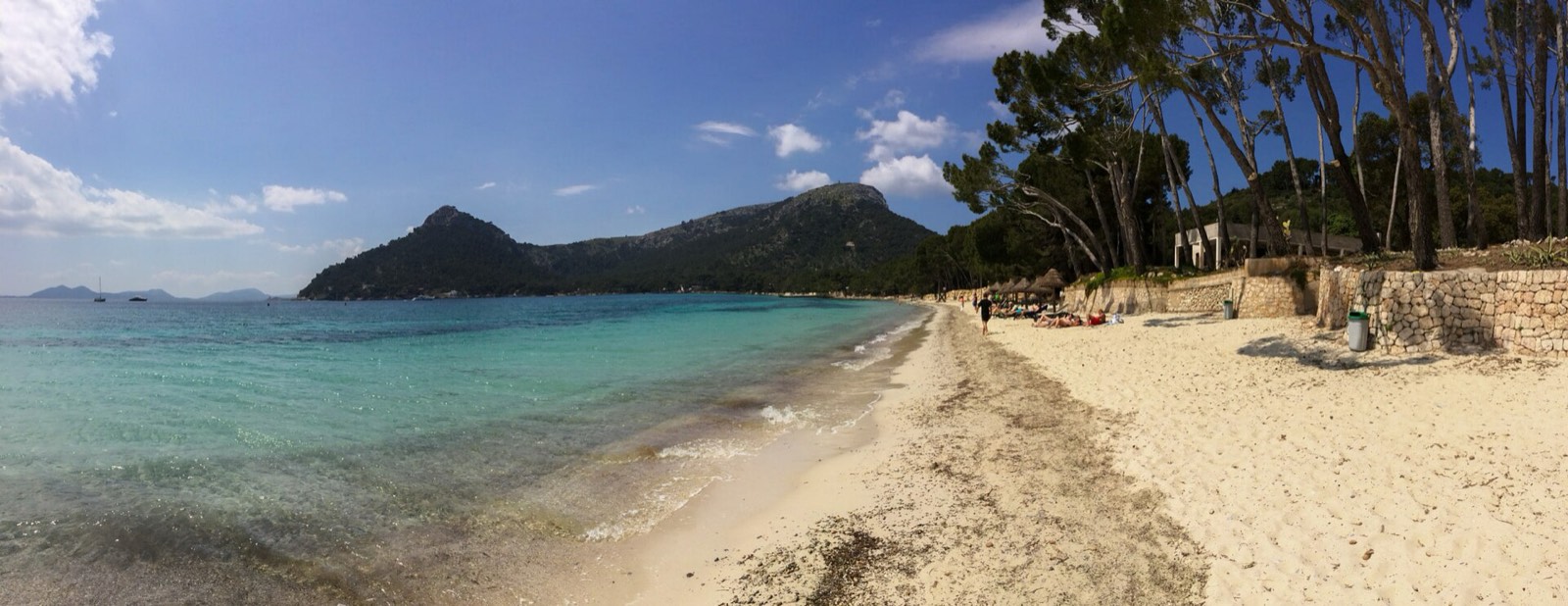
From 15 May to 18 October 2026, between 10:00 and 22:00, private vehicles are restricted on the Ma-2210, the road out along the Formentor peninsula. Almost every guide reports this as "you can no longer drive to Formentor beach". That is not what the rule says.
The road is governed in two sections. From Port de Pollenca to the beach, private cars may drive in without any prior authorisation, until the car park is full. A barrier and a traffic light at the start of the road tell you whether there is space: green light and free spaces on the panel means you drive in. Once it fills, the barrier closes to unauthorised vehicles. Beyond the beach, the section that climbs to the lighthouse is closed to all private cars and motorbikes during those hours, and only the shuttle bus, bicycles, taxis, coaches and authorised vehicles may pass.
Enforcement is not theoretical. The DGT uses automatic plate readers at the barriers, fines run from 100 to 200 euros, and 2,300 were issued in 2025, roughly a thousand more than the year before. If you want to see the lighthouse, the TIB 334 shuttle runs from Alcudia and Port de Pollenca. If you want the beach, arrive before 10:00 or come by boat from Port de Pollenca or Port d'Alcudia.
One quirk worth knowing: the DGT has warned that the restrictions may be modified around the solar eclipse of 12 August 2026, when the island expects an unusual number of visitors on the coast.
Es Trenc: the best sand on the island, and the hardest morning
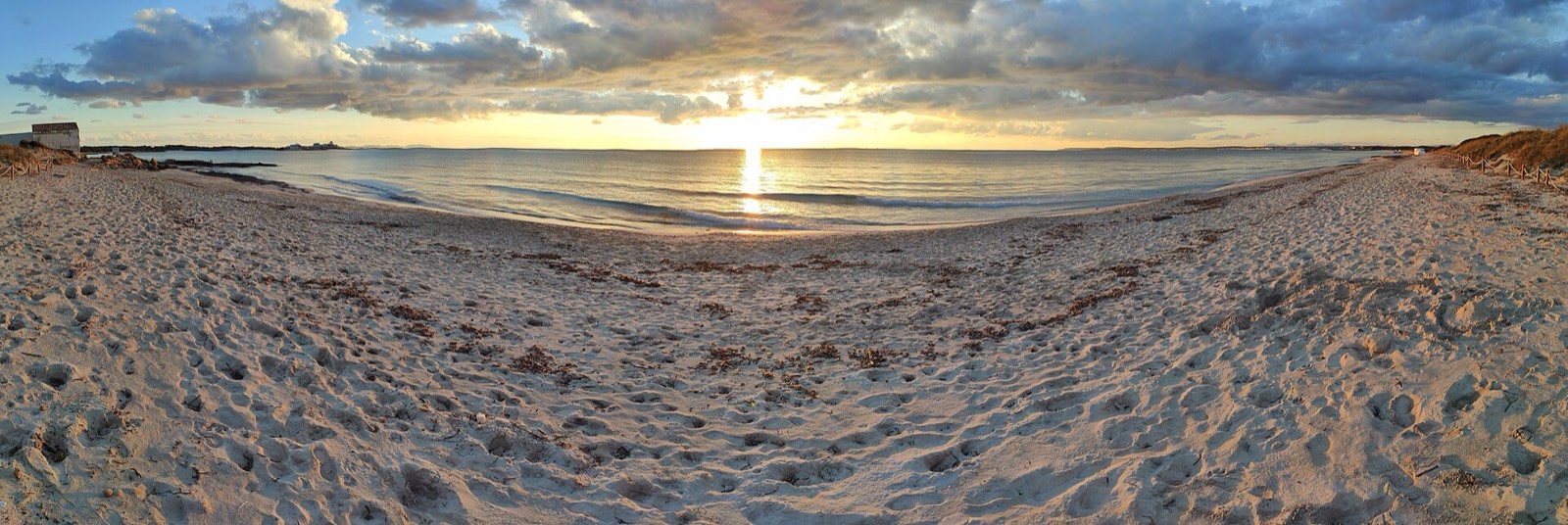
Es Trenc is the beach people picture when they picture Mallorca, and it survives because it is inside a natural park with nothing built behind it. It is also the clearest example of the parking problem.
There are two paid car parks, na Tirapel and sa Barralina at Ses Covetes. Na Tirapel fills by mid morning, and in August the access road is typically closed once it is full, with queues forming on the road from Campos. Since July 2025 the Govern has run occupancy sensors in the car parks and three real time panels on the approach roads, so you can see it is full before you commit to the queue. Use them.
There is no bus to Es Trenc. The park's own advice is to take a bus to Sa Rapita or Colonia de Sant Jordi and walk in, which from Sa Rapita means around 3 km on foot to Ses Covetes. Dogs are banned from March to October, there are no sunbed concessions, and in winter there are no services at all.
The coves you cannot drive to any more
Three of Mallorca's most photographed coves have been closed to cars, and this is the single biggest change in how the island's coast works.
Cala Torta, Cala Mitjana and Cala Estreta, on the wild Arta coast, have been off limits to vehicles since April 2024, with the access tracks physically chained. You walk, cycle or arrive from the sea. Official tourism material warns of strong winds, heavy surf, a steep shelving beach and deep water at Cala Torta, so it suits confident swimmers rather than small children. The beach bar you may read about was demolished by the coastal authority in 2020.
Cala Varques has never had a public road. The way in is a public track of about 1.5 km followed by roughly 700 m of privately owned path, and the ownership of that path has been disputed for over a decade. In March 2026 the Consell de Mallorca sealed the old stretch of the Ma-4014 that people had been using as an improvised car park, with concrete bollards at one end and beacons at the other. The car park approved back in 2023 has still not been built. In practice that leaves a walk of about 2 km each way with no services at the other end, or a boat.
Cala Agulla got a barrier at its entrance in May 2026. Parking on the track inside the natural park is now prohibited and carries a double penalty, for entering the park and for passing the barrier. Police cited 947 vehicles for unauthorised access in a single season. Park at es Clot de sa Grava, a former quarry, and walk.
Cala Deia and the restaurant loophole
Cala Deia is a cove of pebbles and boulders below the village, and when its small car park fills, the council closes the access road from the Ma-10 to all traffic. Buried in the municipal ordinance is a list of who is exempt, and alongside the ambulances and the residents it includes, in plain language, customers with a booking at the restaurants located in Cala Deia.
A lunch reservation is, in effect, your permit to drive down. If you would rather not eat, the other legal way in is on foot: the TIB 203 bus stops in Deia village, and walking down the path bypasses the road closure entirely, because the closure applies to vehicles.
Note that the ordinance sets the paid parking hours as 10:00 to 20:00 from April to October, with a maximum stay of four hours, which is two hours later than most guides claim.
Sa Calobra: the case for leaving the car behind
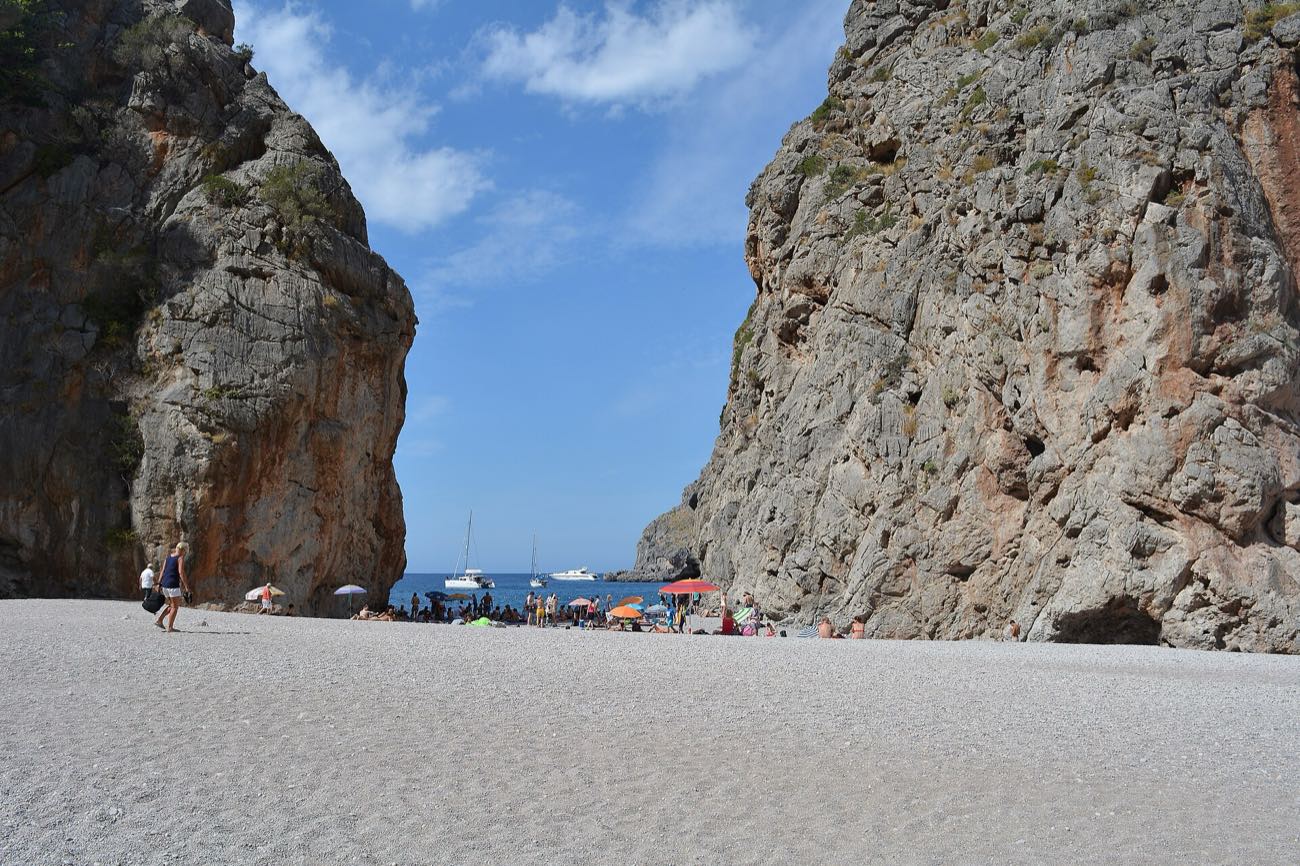
The Ma-2141 down to Sa Calobra is the most famous road on the island and, in July, one of the least enjoyable. It drops around 700 m in 13 km of hairpins, it carries a 10 tonne weight limit since a retaining wall collapsed in 2023, and it is shared by coaches, cyclists and cars in both directions.
Coaches are now rationed. Booking is compulsory year round for vehicles with more than nine seats, there are 35 daily slots at Sa Calobra and 5 at Cala Tuent, large vehicles may only enter between 11:00 and 13:30, and arriving without a reservation costs 200 euros. Private cars are not restricted, though the Consell has proposed a Formentor style closure for a future season.
Two things make this manageable. The Ajuntament d'Escorca publishes the number of free parking spaces at Sa Calobra and Cala Tuent, refreshed through the day, so check it before you drive. Or skip the road: Barcos Azules runs from Port de Soller to Sa Calobra from April to October, taking about an hour each way. You arrive at the same place without the hairpins or the parking gamble. At the bottom, the walk to the Torrent de Pareis beach passes through two narrow stone tunnels cut into the cliff.
If you are tempted by the gorge itself, treat it seriously. It is an unwaymarked route graded difficult, and a University of the Balearic Islands study counted 30 canyoning deaths in Mallorca since 1990, of which 14 were in the Torrent de Pareis.
The beaches you can only reach by boat
Some coves are not a question of parking. There is no road, and there never was.
- Es Carbo (Ses Salines): 1.4 km of fine sand. The official Balearic tourism board says it can only be reached on foot or by boat, and tells visitors to bring their own drinking water. It is about a 1 km walk from Colonia de Sant Jordi.
- Cala Marmols (Santanyi): sand under 20 m cliffs, roughly 5 km on foot from the Cap de ses Salines lighthouse with almost no shade and nothing at the other end.
- Coll Baix (Alcudia): the council's own description is 3 km of continuous climbing to the refuge, then about 30 minutes down a path whose final section needs careful footing. Officially, boat or steep footpath, and nothing else.
- Cala Castell (Pollenca): the only land route crosses a private estate, with guided visits capped at 15 people a day and none in August, and going down to the beach is prohibited during the bird nesting season.
- Cabrera and Sa Dragonera: islands. The Consell de Mallorca states it plainly for Dragonera, that the only access is by sea.
Arriving by boat: the four things to get right
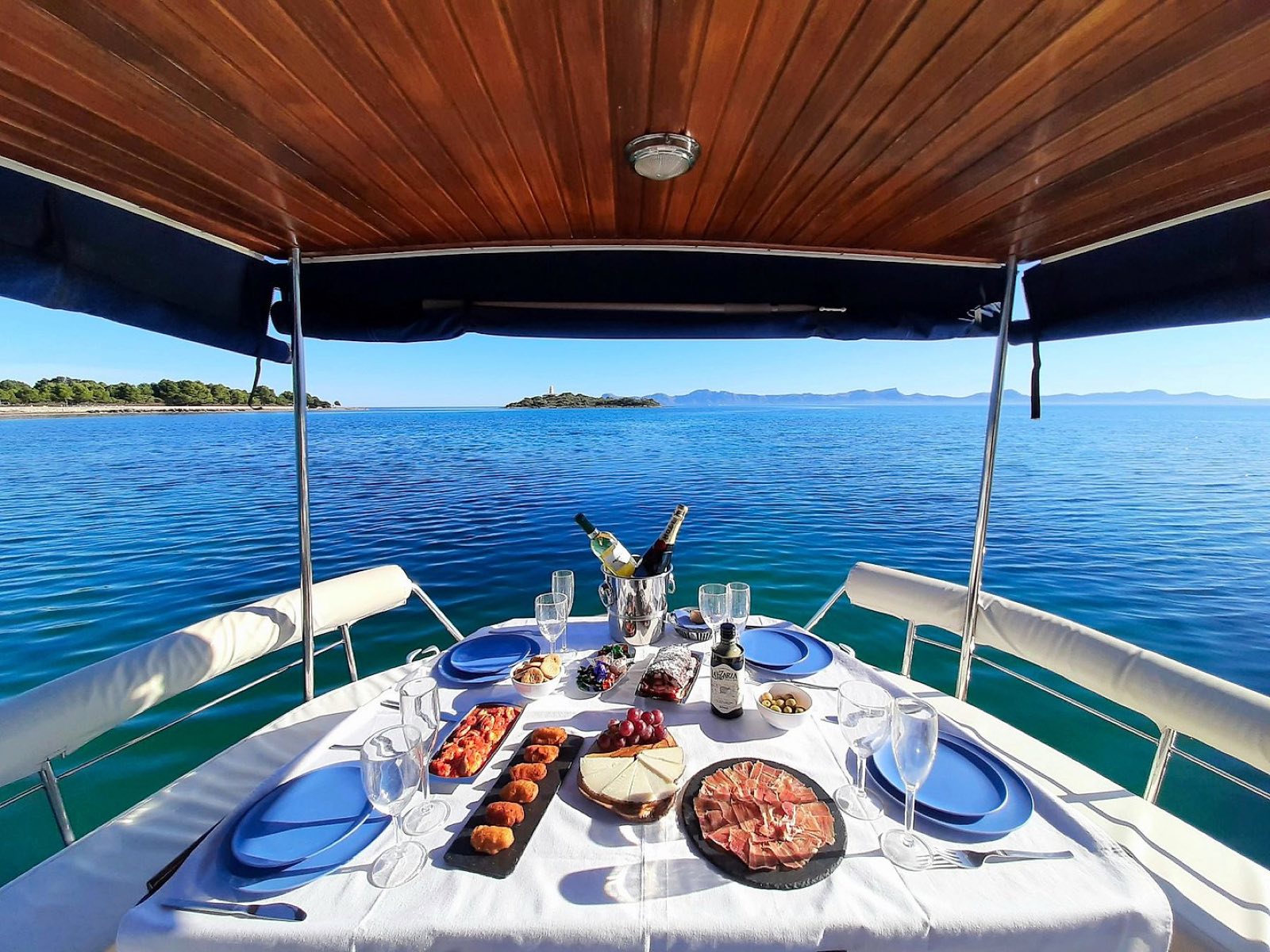
Arriving from the water solves most of the access problems in this guide. It also comes with rules, and two of them carry serious money.
You cannot anchor on posidonia. The Balearic decree on posidonia conservation prohibits anchoring over the seagrass meadows outright. This is enforced from the water: the Govern's surveillance service runs from mid May to early October with 20 boats, and in the 2025 season it carried out more than 181,000 actions and moved 10,062 boats off the meadow or out of risk zones. Most of that is advice rather than penalties, but the fines available under Balearic law reach into the hundreds of thousands of euros. Use the Govern's own anchoring map before you drop the hook, and where there are official buoy fields, book one.
Cabrera needs a permit. Navigating, anchoring or diving in the national park all require authorisation. The navigation permit is free and valid for a year. Anchoring is on buoys only, capped at 50 boats a day, with a two night maximum in July and August, and there are also free daytime buoys at Es Burri and in the port. On top of that, the park caps visitors at 300 a day on the island and 150 in the surrounding water, with a maximum of 80 passengers per boat, and in March 2026 the courts upheld those limits against an operator's challenge. If you would rather not deal with any of it, authorised day trip operators sail from Colonia de Sant Jordi.
The licence rules are about to change. Today, Spanish law lets you take out a motorboat up to 5 m with an engine up to 15 hp with no qualification at all, in daylight, within 2 nautical miles of your departure port. In Mallorca an additional maritime authority resolution caps rented boats of that size at 7 knots and 1 nautical mile offshore. Real Decreto 1188/2025 removes the exemption for rented boats from 1 October 2026, which means this is the last summer you can hire a small boat in Spain without a licence. After that you will need a qualification, or a skipper.
A licence free boat cannot get you everywhere. Those distance limits matter. Cabrera sits far beyond them, and so do several of the remote Manacor coves if you set off from a distant marina. If your plan is a specific cove, check the distance from the port you are actually leaving from before you book the boat. A skippered tour has no such limit, because the skipper holds the qualification.
Without a car
If you are staying in Palma and not renting a car, your options are real but limited to the city's own coast. EMT line 25 runs to Can Pastilla and Playa de Palma every 8 to 20 minutes, and line 4 serves Cala Major, Illetes and Cala Comtessa. Illetes is the strongest argument for the bus, because the Calvia council itself says parking there is very limited.
What the bus network does not do is reach the wild beaches. No line serves Es Trenc or Portals Vells. There is no dune backed beach inside the bus network, and no amount of planning changes that. If you want that kind of coast without a car, the boat is the answer, not the timetable.
Palma's lifeguard season runs from late March to the end of October, with cover from 10:00 to 19:30 in July and August.
Blue Flags, and two surprises
Mallorca holds 22 Blue Flags across 11 municipalities in 2026, part of 33 in the Balearics. Formentor, Cala Barques and Cala Molins in Pollenca have one, as do Cala Mondrago and S'Amarador in Santanyi, Platja d'Alcudia (with a special mention for accessibility), Platja de Muro (for its lifeguard service), and Cala Estancia, Cala Major and Ciutat Jardi in Palma.
Two absences are worth knowing. Playa de Palma does not have one. Neither does anywhere in Calvia, which includes Magaluf, Santa Ponsa and Palmanova, because the municipality left the scheme and uses a different quality mark instead. A "Q" flag on the beach is not a Blue Flag. Several municipal tourism pages still advertise Blue Flags their beaches no longer hold, so trust the official list rather than the sign.
What you can actually be fined for
- Drinking alcohol in the street in the tourist excess zones, which include Playa de Palma and Magaluf, is prohibited under a 2024 decree, with fines from 500 to 1,500 euros.
- Camping on any beach is banned nationally under the coastal law, not by local rule. There is no beach in Spain where it is permitted.
- Glass on the sand is prohibited in Palma. Two municipal ordinances grade the offence differently, so the exposure runs somewhere between 300 and 1,500 euros.
- Dogs are banned from Calvia's beaches from April to October and from Es Trenc from March to October. The island's designated dog beaches are Es Carnatge in Palma, Punta des Marroig in Palmanova and Cala des Gats in Costa de la Calma.
- Reserving a spot with a towel is not an offence in Mallorca. You may have read otherwise this summer. The councils that introduced those fines are on the mainland and in the Canary Islands, and no Balearic municipality has such a rule.
- Smoking on the beach is mostly a request, not a ban. Around 45 Mallorcan beaches have joined the voluntary smoke free scheme, and there is no national ban on smoking at the beach, whatever the headlines said.
When to go, and how to plan the day
The crowding is not evenly spread. July and August account for roughly a third of the Balearics' international arrivals, and at the peak of last summer there were more than two million people on the islands against a resident population of 1.25 million. That ratio is what you feel in a car park at 11:00.
The practical version is simple. In July and August, be at the car park before 09:30 or do not use a car park at all. In May, June, September and October the same beaches work at a civilised hour, the sea is still warm from late May onward, and the restrictions at Formentor lift entirely after 18 October. For the sea temperatures and the month by month picture, see our guide to the best time to visit the Balearic Islands.
And if a cove keeps coming up on your list that has no car park, no bus and a warning about a two kilometre walk, that is not a problem to solve on land. Turinity lists boat tours, catamaran trips, kayak excursions and self drive boat hire across Mallorca, from Palma Bay and Alcudia to the coves the roads gave up on.
Frequently asked questions
What is the best beach in Mallorca?
Which beaches in Mallorca can you only reach by boat?
Can you still drive to Formentor beach in 2026?
What time do the car parks fill at Es Trenc and Calo des Moro?
Do you need a licence to rent a boat in Mallorca?
Which Mallorca beaches have a Blue Flag in 2026?
Can you be fined for reserving a spot on the beach with a towel in Mallorca?
Which beaches can you reach from Palma without a car?
Book one of these on Turinity
Sources
Access restrictions to Calo des Moro and Cala s'Almunia from 1 June. Ajuntament de Santanyi (2026)
New access barrier installed at Cala Agulla. Ajuntament de Capdepera (2026)
The Govern bans car access to Cala Torta, Cala Mitjana and Cala Estreta. Ultima Hora (2024)
Coll Baix beach: access on foot or by sea. Illes Balears Travel (official tourism) (2026)
Es Carbo beach: reachable only on foot or by boat. Illes Balears Travel (official tourism) (2026)
Live parking availability for Sa Calobra and Cala Tuent. Ajuntament d'Escorca (2026)
Sa Dragonera Natural Park: the only access is by sea. Consell de Mallorca (2026)
Blue Flag 2026: list of awarded beaches. ADEAC (Blue Flag Spain) (2026)
Beaches and bathing zones of Palma: services and lifeguard season. Ajuntament de Palma (2026)